
Timber Frame Unlocks Faster, Cleaner Homebuilding
- 10 minutes ago
- 3 min read
Britain’s housing crisis demands urgent, scalable, and sustainable solutions. To deliver 1.5 million homes in five years, the construction industry must adopt faster, cleaner and more efficient building methods. Structural timber is a powerful answer, offering speed, reliability and environmental advantages while already operating at meaningful scale.
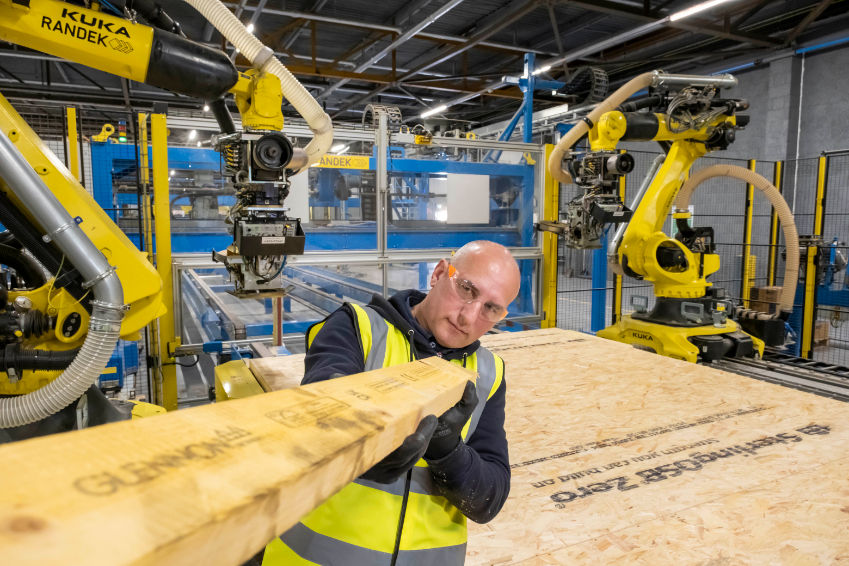
The UK timber sector has an established capacity to deliver over 100,000 homes per year, representing roughly one third of the government’s housing target. This capacity exists today and is ready to be mobilised. The shift towards timber is already well underway, with seven of the top ten volume housebuilders having invested in their own timber frame manufacturing facilities, demonstrating that timber is now a mainstream construction method rather than an experimental alternative.
Timber frame construction significantly accelerates delivery. Homes can be built in 13 - 15 weeks, compared to 25 - 30 weeks for traditional masonry, effectively halving build time. Properties can be made weathertight 6 - 10 weeks earlier, allowing internal works to begin sooner and reducing exposure to weather delays. Faster programmes mean earlier completions and handovers, improving overall project efficiency.
Shorter build times also translate into reduced time on site. On a typical 50-home development, site preliminaries can be cut by 8 - 12 weeks, lowering associated costs. The use of off-site manufacturing and “just-in-time” delivery reduces the need for storage, plant hire and material handling, while improving predictability and minimising delays. Despite these advantages, timber frame construction remains cost-comparable with traditional masonry, making it a practical and economically viable solution.
In addition, timber frame systems improve productivity by removing bricklayers from the critical path. This enables internal and external works to be carried out in parallel, increasing efficiency and reducing programme risk.
Timber frame construction delivers significant reductions in material waste compared to traditional building methods. Precision off-site manufacturing means components are produced to exact specifications, greatly limiting excess. As a result, concrete block waste can be reduced by up to 50%, while timber waste can be cut by as much as 90% compared to masonry construction. This leads to cleaner, safer sites, lower disposal costs and a meaningful reduction in environmental impact.
Sustainability is a key strength of timber construction. Timber is the only mainstream building material that stores more carbon than it emits. Concrete produces over 210kg CO₂e per cubic metre, while sawn softwood emits just 69kg CO₂e per cubic metre. In addition, timber stores an average of 750kg CO₂e per cubic metre within the structure, locking carbon in for decades. Overall, timber frame construction can achieve a 20–60% reduction in embodied carbon compared to masonry, supporting the transition to net zero.
Fire safety performance is also robust and fully certified. The Structural Timber Association has published a Pattern Book of EN-tested wall, floor and roof systems with REI30 and REI60 fire resistance ratings. These systems comply with UK building regulations and have been independently peer reviewed. REI ratings refer to how long a building element can maintain its structural integrity (R), prevent the passage of flames and hot gases (E), and provide insulation against heat (I) during a fire; REI30 and REI60 indicate certified performance for 30 and 60 minutes respectively.
Quality and compliance are further reinforced by the STA Assure scheme, a recognised industry accreditation used by NHBC and other warranty providers. STA Assure ensures that accredited members follow rigorous, proven processes across design, manufacturing and installation. Companies within the scheme are independently audited and required to meet strict standards, including mandatory training for installers. This provides clients, developers and regulators with confidence that timber frame systems are being delivered safely, consistently and to a high quality.
Although timber frame accounted for 12% of new homes in England in 2024, its wider adoption is proven elsewhere, with 92% of new homes in Scotland using timber frame. With faster build times, lower embodied carbon and increasing investment from major housebuilders, timber frame construction is well positioned to play a central role in meeting the UK’s housing targets.
Timber frame housebuilding offers a compelling combination of speed, scalability, sustainability and reliability.
With proven systems, strong industry backing and existing capacity, it provides an immediate and effective solution to delivering more homes, faster and cleaner, while supporting a net zero future. For further information, call 01786 812 921 or visit Uk.westfraser.com
Note: All stats supplied by the Structural Timber Association