
The Standard For Future Home Energy Efficiency
The UK's Future Homes Standard, which comes into force in March 2027, will impact window specification, focusing on ways to improve airtightness as energy ratings for properties continue to tighten, says Andy Swift, sales and operations director - UK for sealant tape manufacturer ISO-Chemie.

The UK's Future Homes Standard mandates a 75% to 80% cut in carbon emissions, ensuring that new homes and non-domestic buildings are built with low carbon heating and high levels of energy efficiency. While there are some significant changes coming down the track, from a fenestration viewpoint, the Regulations amend Part L of Schedule 1 to reflect the dual aims of reducing greenhouse gas emissions and conserving energy.

This means that the focus for Part L will no longer solely be about energy use. It’s now explicitly targeting carbon emissions, shifting the narrative away from window fabricators selling thermal performance as an energy-efficiency solution to a carbon footprint debate among a wide audience of specifiers, housebuilders, and ultimately end-users.
The Future Homes Standard is set to bring significant changes to building regulations that will affect homeowners planning renovations, too. Part L of the building regulations governs energy efficiency in buildings, and recent announcements mean that when homeowners replace their windows, they’ll need to install products that improve thermal performance significantly, including reducing heat loss, minimising draughts, and improving overall insulation.
Heat will always find the fastest exit as it comes up against the ‘A’ or ‘A+’ rated window, and invariably this emanates from the 10mm or so expansion gap left around the window following fitment. This is normally left empty, but some amount of spray foam can be injected to fill the void before a silicone trim is applied for a smart looking finish. Unfortunately, as expedient as this might seem, none of these solutions create a measurable, long term, high performance thermal, acoustic or airtight barrier - the U-Value of the installed window is simply reduced, which leads to heat escape and, ultimately, financial loss.
That’s why the housing and construction sector deserves better insulating solutions to improve energy efficiencies, especially if the predicted 840,000 new homes to be completed in the five-year period to 2028/29 is achieved and £16bn of new public investment to fund over 500,000 new homes as part of a new government-backed ‘housing bank’ designed to unlock billions in private sector investment to turbocharge housebuilding is realised.
Elsewhere, the retrofit sector is expected to see growth as opportunities arise thanks to active central funding initiatives and the release of additional funds in the coming 12 months. The Government is supporting its ambitions to upgrade five million homes within five years, investing £13.2 billion in grants and low-interest loans to improve existing housing stock.
These moves see a strong market focus on the use of window and door foam sealants, with increased specification of rapid product solutions to deliver better energy conservation - particularly as fuel bills continue to rise.
In modular construction, which is gaining increasing traction and will see continued integration with the more traditional methods of building in 2022, enabling developers to bring forward housing projects more expediently, designers and specifiers are looking at new ways to deliver low carbon structures, which use sustainable technologies to deliver measurable airtight, acoustic and thermal sealing benefits.

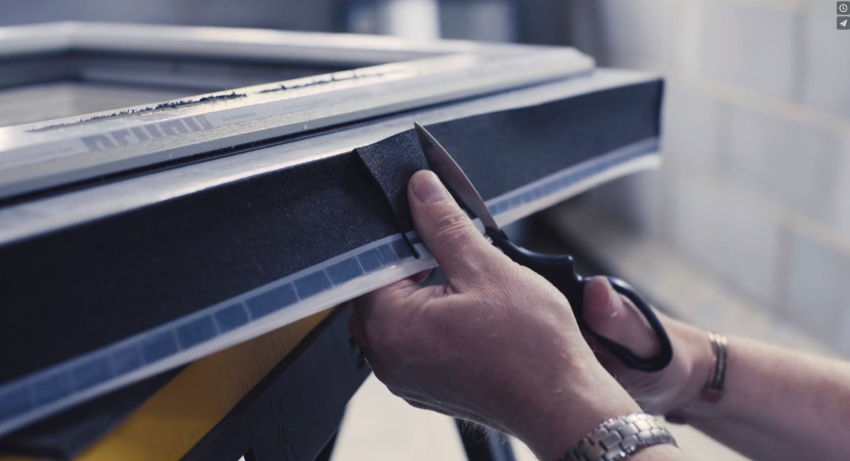
And this is where self-adhesive foam sealing tapes can add real value, enabling developers to bring forward housing projects more expediently. They can use ‘smart’ foams impregnated with different substances to create a measurable U-Value as low as 0.6w/m2k, offer superb thermal insulation and can contribute to acoustic sound reduction by 63dB.
As these installation tapes are completely weather tight against driving rain up to hurricane force wind speeds, installers can quickly apply them around the frame during initial fitting. This provides the assurance that they have completed a comprehensive ‘A’ rated installation rather than just supplying an ‘A’ rated window. This is a benefit that can be sold on to deliver enhanced energy efficiency advantages for customers and property owners.
The UK's Future Homes Standard is set to have an impact as energy ratings for buildings and property become stricter. These include energy and ventilation standards for residential and non-domestic buildings that are far better for the environment and fit for the future - higher air and thermal standards for house construction has to be a priority.
Technical innovation through sealing technologies is one way that those responsible for fenestration specification can do more to support greater energy efficiency and mee the requirements of Part L. Indeed, as sustainability continues to be of paramount concern in the development of low carbon and eco-friendly building projects, we will see technologies such as foam tapes, which can add real value during the initial and post construction phases, grow in importance as one of the most effective solutions for sealing window joints and gaps in houses. More at https://www.iso-chemie.eu/en-GB